The Grand Rapids City Commission listened to two public hearings regarding housing subdivision tax breaks for developers at its latest meeting, both of which promised to comply with the city’s racially discriminatory tax incentive policy.
The two projects which were presented to the public and the Commission on March 17 and will be up for vote tomorrow, are outlined below.
Knapp Hills
Knapp Hills is planned to be constructed on a 6.355-acre lot located at 2070 Dean Lake Avenue NE in Grand Rapids. It is projected to contain 38 multi-family townhomes, mostly two- and three-bedroom townhomes, with the total project costing a projected $12.3 million.
The developer intends to designate 21% of the units for tenants earning at or below the area median income (AMI) for 17 years—the length of the developer’s tax reimbursement, which, if passed, will be approximately $2 million over the course of that time.
According to the report, rent losses over the course of 17 years could amount to nearly $600,000. The city’s tax refund would subsidize a portion of that loss.
Economic Development Director Sarah Rainero also told the commissioners that the developer could spend up to $2 million “dedicated to inclusion plan aspirational goals.”
In practice, this means that the developer is “working towards the following subcontractor participation goals in connection with the project for Micro-Local Business Enterprises (MLBEs), Women-Owned Business Enterprises (WBE), and Minority-Owned Business Enterprises (MBE) during construction.”
Approximately 10% of the subcontractors are scheduled to be micro-local business enterprises, 2% are to be women-owned, and 10% minority-owned.
The Commissioners and the public had little to say about the proposed development, though Mayor David LaGrande praised the townhome layout for its energy efficiency.
“Got to love the design,” he added. “All those people are going to have shared walls, which is going to cut down on their long-term ownership costs for heating, savings.”
Were the commission to approve of the tax abatement, construction would begin this year and conclude by early 2028.
Lake Eastbrook Apartments
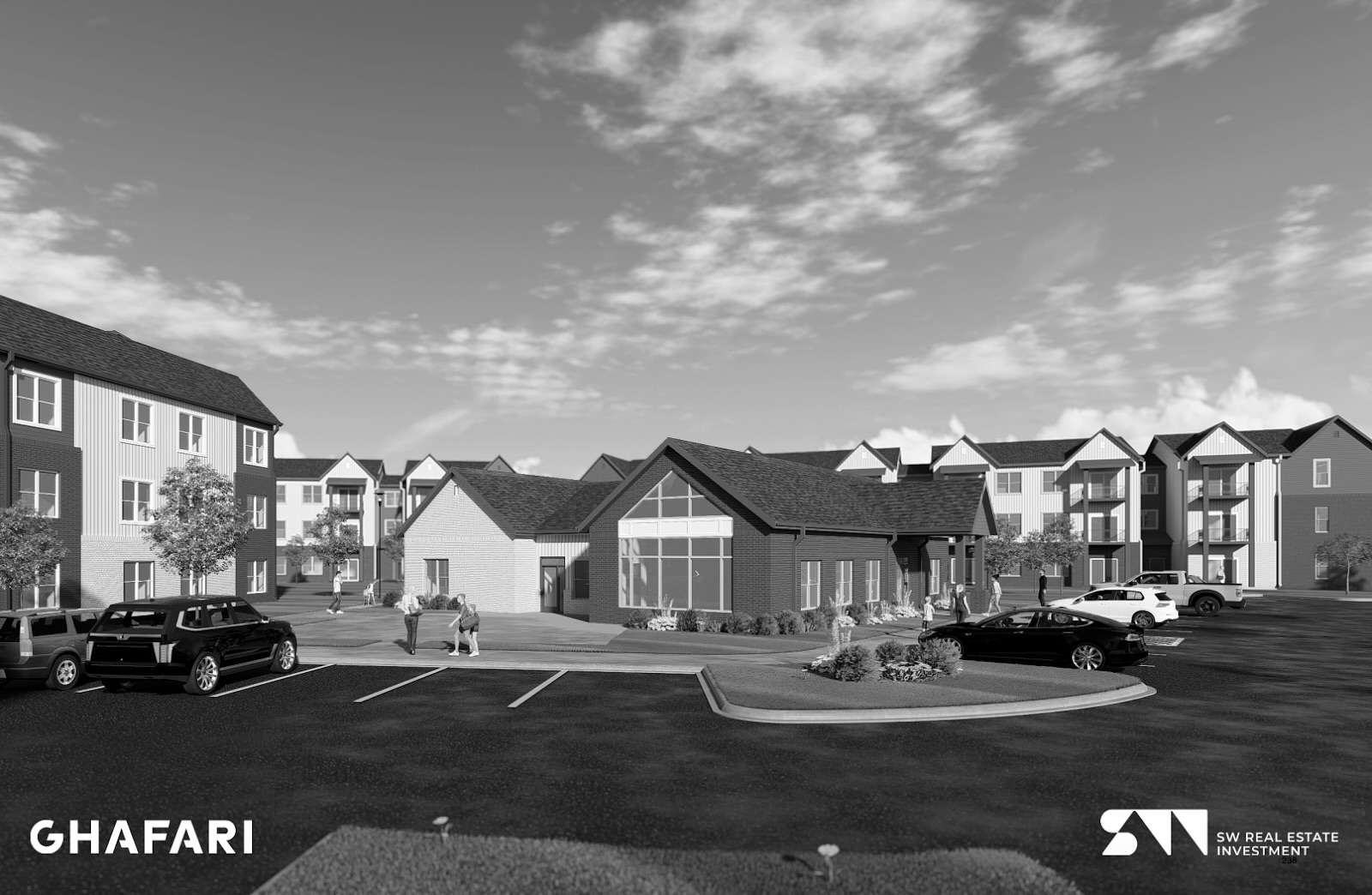
The Lake Eastbrook Apartments are planned to be located on 6.04 acres at 3538 Lake Eastbrook Blvd SE. The developer aims to construct four buildings, containing 132 total units–a $25 million total project with approximately $3.6 million dedicated to aspirational inclusion plan goals.
All of the units will be one- or two-bedroom apartments.
As with Knapp Hills, the Lake Eastbrook developer will also prioritize hiring minority- and women-owned businesses and subcontractors for projects supported by city incentives. The developer plans to hire approximately 3.85% of both minority- and women-owned businesses.
Ward 3 Commissioner Kelsey Perdue asked about the price range of the Lake Eastbrook complex: “Can you talk a little bit about affordability?” she asked.
The developer said that he intends to designate 45% of the units for tenants earning 90% to 100% of the AMI for a 25-year period. He is requesting a tax reimbursement totaling over $10.5 million over the course of that period to subsidize rent losses.
Mark, a resident from Grand Rapids, spoke during the public hearing, noting safety concerns about a condensed apartment complex being located on 28th Street.
“My concern is about the safety,” he said. “We are talking about 28th Street,” which he called “the most dangerous street in the Grand Rapids area” due to its heavy traffic.
The future of both tax reimbursements will be determined at tomorrow’s City Commission meeting.
Legal Questions
The city’s policy of distributing tax incentives on a racial and gender basis might be illegal. Judge Glock, senior fellow at the Manhattan Institute, told The Grand Rapids Herald that the city’s program is likely “operating close to the line of what the Supreme Court has called unconstitutional.”
Citing the 2022 Supreme Court ruling Students for Fair Admissions v. Harvard, Glock said the “explicit use of race or sex” by the city in its tax benefit distributions “likely runs afoul of the 14th amendment equal protection clause.”