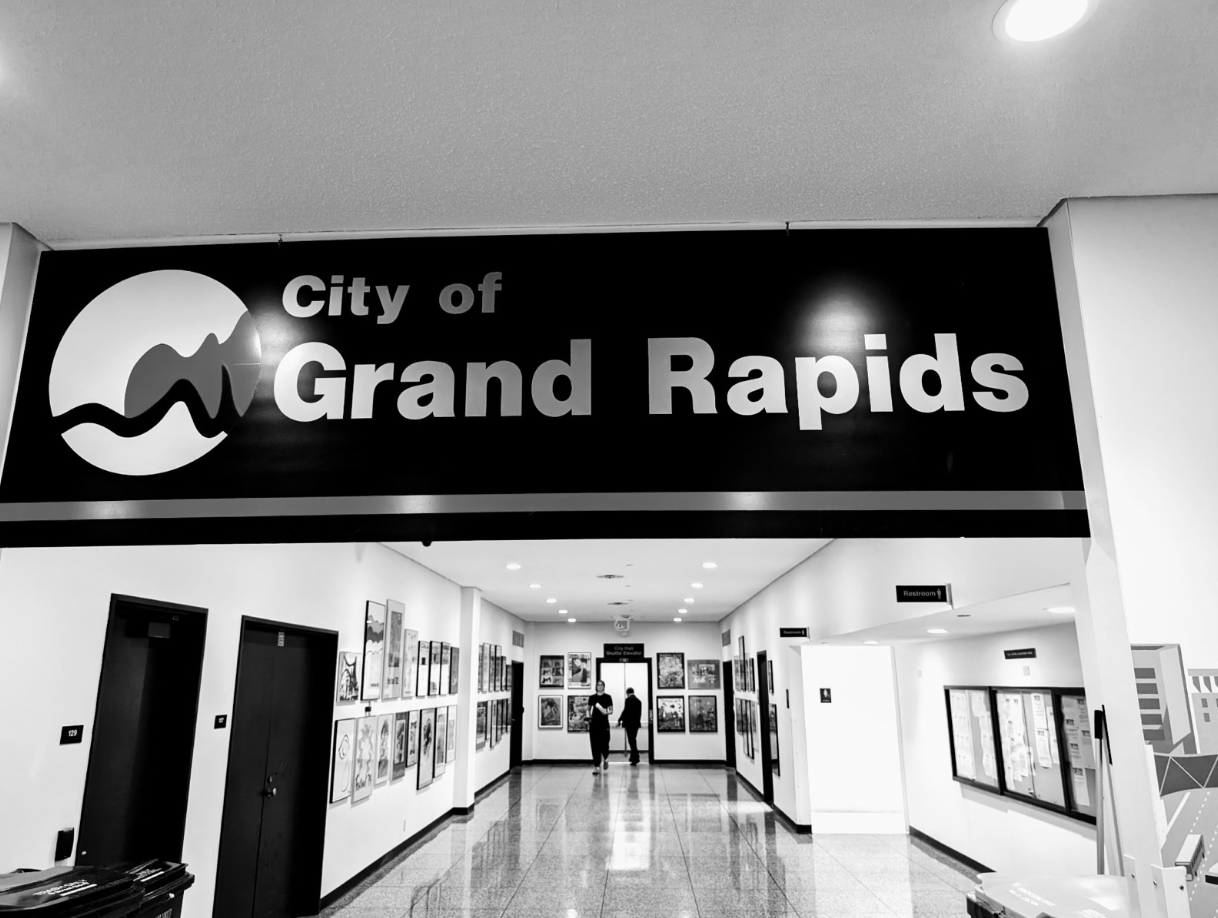
The City of Grand Rapids distributed $2 million from the American Rescue Plan Act (ARPA) to the city’s three wards on the basis of equity metrics, not population.
The city is in its final year of its participatory budgeting initiative, a mechanism by which it justified the skewed funding distribution. The budgeting initiative launched in 2021 with $2 million in ARPA funds.
The budget initiative was considered a leading example of the so-called “third wave” of participatory budgeting—an approach that prioritizes equity outcomes and demographic targeting over the usual population-based allocation methods. Most ARPA-funded programs will end when the funds are exhausted at the end of this calendar year.
Despite the relatively similar population of all three wards—each of which contains between 60,000 and 70,000 residents—the city used a graduated formula to divide the $2 million: $600,000 to the first ward, $400,000 to the second ward, and $1 million to the third ward. Since that time, the city has expanded its equity-based budgeting to other areas of the city’s $735 million annual budget.
City documents frame the uneven distribution as a tool to advance equity rather than allocate strictly by population or some other uniform criteria.
The Process
The participatory budgeting process invites residents to submit ideas and vote on projects, with the explicit aim of directing resources toward “historically underserved” areas and populations.
At city-sponsored events, residents from each area first brainstorm project ideas for how to spend a set amount of city money. Volunteer “budget delegates” then turn favored ideas into detailed, feasible proposals. Finally, all residents vote on the proposals, and the city funds and implements the winners.
Selected projects have included initiatives around affordable housing for youth in crisis, mental health response, childcare, and civic activism programs.
Oversight and implementation tie directly into the city’s broader diversity, equity, and inclusion framework, guided by the Office of Equity and Engagement, which played a central role in directing participatory budgeting efforts.
The initiative has been cited alongside other similar programs in cities like Los Angeles, Seattle, and Sacramento that emphasize racial justice and program-specific equity goals.
The Projects
Though equity initiatives have been implemented throughout the city, the third ward has been tagged by the city as an area in need of extra appropriations.
In Ward 3’s $1 million participatory budgeting ARPA allocation, $205,000 was earmarked for “Community-Based Violence Reduction Initiative,” a program that emphasizes non-law-enforcement.
The residents also chose to allocate $150,000 to Vibrant Futures for “Affordable Childcare for 2nd and 3rd Shift Workers.”
Pitfalls
In the wake of the 2024 elections, federal grant money for equity-based programs has run dry. And though the participatory budgeting experiment has ended, the city has chosen to stick with its equity-focused budgeting process, even amid changes in federal policy.
City budget documents continue to reference “racial equity lenses,” “systemic barriers,” and targets for minority-owned, women-owned, and locally-owned business participation.
The fiscal year 2026 $735 million city budget included another $1 million for the Third Ward Equity Fund—originally seeded in 2019—for infrastructure, business development, arts, and community projects.
Write to jacob@grherald.com.