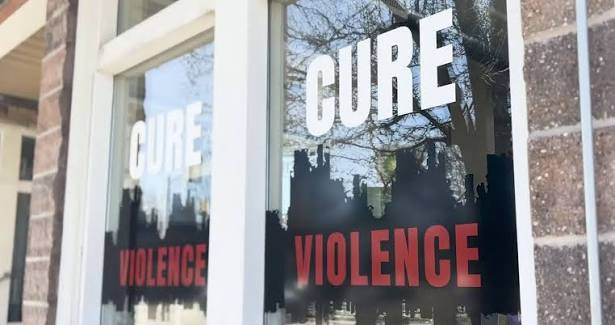
The Office of Oversight and Public Accountability (OPA) does not have a report tracking its spending on Cure Violence, a city initiative designed to treat violence as a public health crisis.
A city spokesperson told The Grand Rapids Herald that the office, which uses a $2 million federal grant to administer the program, would need to compile internal tracking data for its Cure Violence spending. They added that it would only create such a document if first presented with a Freedom of Information Act request for the information.
“The Office of Public Accountability doesn’t maintain a single, readily available report that captures all program-related expenses — such as staffing, interrupter contracts and training —across the full span of the program,” the spokesperson wrote via email. “Compiling that information would require generating a custom financial report.”
The revelation comes as aggravated assaults in Grand Rapids’ Third Ward are steadily rising, despite city officials’ decision to support Cure Violence as a resolution to the situation.
The Data
Cure Violence is an “evidence-based violence reduction and intervention” partnership between the city and the Urban League of West Michigan. The partnership is led by Cure Violence Global (CVG), a national nonprofit group which views violence as a public health issue.
While Cure Violence reports declining assaults, aggravated assault figures are still in the triple digits within its geographically limited jurisdiction and have not impacted overall city trends.
The groups administering the program have received millions in funding, though the total amount spent on Cure Violence since the program’s start is not publicly available.
Cure Violence operates in the Third Ward within a confined 15-by-19-block area bordered by Division Avenue, Fuller Avenue, Wealthy Street, and Hall Street. In this area, Cure Violence reported a 40% decrease in aggravated assaults from January 2021 to June 2025, according to the group’s own report.
The program began operating in the Third Ward in November 2021. Between December 2021 and December 2022, there were 208 aggravated assaults within Cure Violence’s jurisdiction. From June 2024 to June 2025, its most recent data published, there were still triple-digit aggravated assault numbers in that area with 168 in total.
Cure Violence Grand Rapids in 2025 recorded 4,266 “interactions that led to violence detections and interruptions.” Of those, 127 interactions led to “identification and treatment of high-risk individuals,” and 288 “led to mediations with key individuals involved in other conflicts.”
Data from GRPD’s crime dashboard shows aggravated assaults are on the rise in the city as a whole, even including Cure Violence’s mitigation work. Total aggravated assault numbers have gradually risen since 2023, which saw 705 assaults, followed by 737, 760 and 779 in each ensuing year.
By July of this year, the city had already exceeded its total 2025 aggravated assault figure of 760 and is now extending that number even higher.
The police department’s South and East service areas, which cover the Third Ward, each show overall signs of increased assaults. Since January, the East Service area saw 182 aggravated assaults, an increase of 10.6% compared to the same time in 2025. In the South service area, there were 178 aggravated assaults, 1.1% higher than the 176 recorded this time in 2025.
Comparatively, the North service area, which mostly covers the Second Ward, shows a 10.1% decrease in assaults. The Central service area, which covers downtown and its surroundings, also saw assaults decrease by 5.6%.
Crimes against persons, which also include sexual assault, intimidation and kidnapping, are up 8.5% in the East service area and 3.7% in the South.
Finances
Grand Rapids says via a city website that it serves as both a “fiduciary” for Cure Violence and as “the primary oversight agency” for the program.
“The City provides information, resources, and ensures compliance with the CV model,” the city’s website reads. “The City was also the first organization to commit funding to CV in Grand Rapids.”
Local activists have demanded that Grand Rapids adopt the Cure Violence program since at least 2018. The program was officially launched in 2021 with eight violence interruptors.
Each of the group’s founding interrupters had experienced violence in Grand Rapids first hand, and several had even done jail time, according to local reporting at the time. The group in its first year chose Franklin and Division in the Third Ward as its “target impact area” and has since expanded outward.
The program is administered by the city’s Office of Oversight and Public Accountability. Leading that group is Brandon Davis, who also leads the city’s Office of Equity and Engagement and has prior experience with Black Lives Matter and other social justice work.
The city’s preliminary fiscal year 2027 fiscal plan noted Cure Violence is funded through a $2 million federal grant awarded to OPA.
OPA is also slated to receive a proposed $2.9 million budget appropriation from the city for the 2027 fiscal year. Of those dollars, $1.7 million are allocated for the Axon body camera contract held by GRPD.
The salaries of Cure Violence’s interruptors are not publicly available, though one job listing posted this month by the Urban League appears to offer $3,550 monthly, or about $42,600 per year before taxes. Another 2025 job listing for an OPA Administrative Services Officer responsible for overseeing the program listed a salary range between $94,533 and $120,641 per year.
Community Conversation
Members of the City Commission this month approved $125,000 to provide training, technical assistance and licensing for Cure Violence. City resident Cindy Hicks testified during that meeting that the program has not been effective.
“Cure Violence has not cured any violence, not where I live,” she said. “My neighbors, there’s teens and twenties. They’re burying their friends and their family members. Every single day that I get on Facebook, there is one more person that is losing someone in their life to extreme violence.”
Mayor David LaGrand later addressed those comments, saying he was “saddened” by the remarks.
“It’s very much an alternative to the way we look at violence, and it’s very much a harm reduction system,” he said of Cure Violence. “It’s very statistically grounded, and I think it has great promise. It’s one of the reasons why I’m glad this city is investing in it.”
Cure Violence also posted a social media video refuting Hicks’s comments.
“Violence is a global issue, not just here in our community, but we here at Cure Violence, Urban League of West Michigan, along with you, are dedicated to eliminating violence here in our city,” one Cure Violence member said in the video.
Cure Violence Global
CVG, the national nonprofit behind the approach to mitigating violence, also operates in other U.S. cities such as Baltimore, Philadelphia and Chicago, as well as internationally.
The group proposes a three-step plan to resolving violence, which involves deploying trained “violence interrupters. These unarmed individuals are trained in deescalation and are charged with preventing shootings by intervening in street conflicts.
“Interrupters and other staff work separate from law enforcement and must remain independent in order to maintain the credibility needed to work those at highest risk,” CVG’s website reads.
The group in 2024 had $3.88 million in revenue, which was sourced from contributions and “program services.” Its six board members each made between $113,962 and $179,981 that year.
Its board is made up of members with deep ties to Democratic causes. Board member Eric Goosby served on the Biden Covid Taskforce and as Global AIDS Coordinator under President Obama. His bio also lists him as a former member of the Clinton administration.
Board member Dan Ratner also served as technology director in the 2012 Obama campaign.
Write to jackson@grherald.com
Editor’s note: After publication, the city clarified that they could compile internal tracking data to provide Cure Violence spending figures. We updated the headline to reflect that clarification.