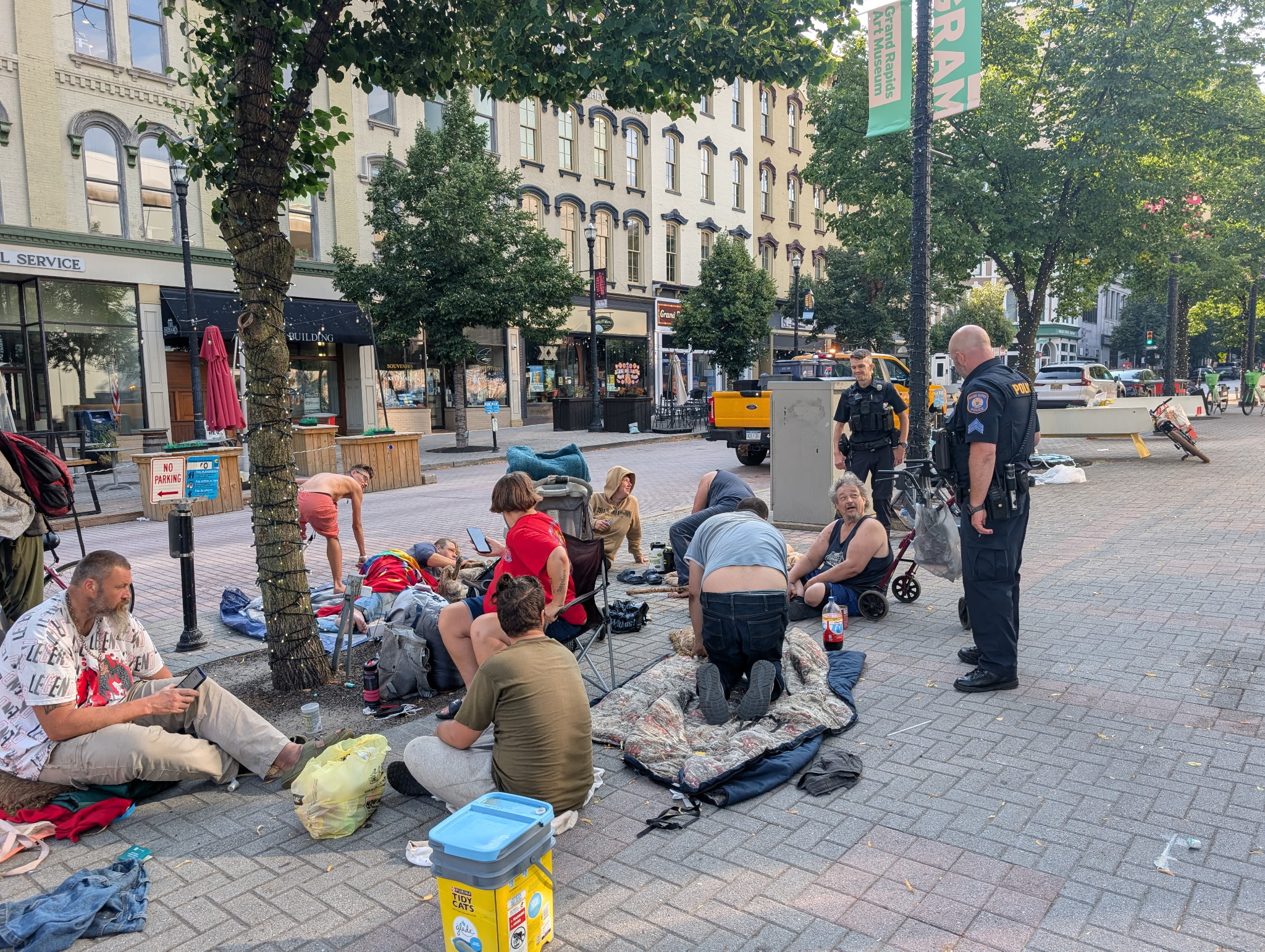
Grand Rapids Police Sergeant Daryl Howard knows much of the city’s homeless population by name.
In his role as a community police officer, Howard regularly interacts with many of Grand Rapids’ homeless residents. While his job primarily involves enforcing rules regarding excessive property and improper use of public facilities, Howard said a big part of the role is about building relationships.
“If you allow bad behavior to continue, it’s not human decency,” Howard told The Grand Rapids Herald during his Tuesday morning downtown patrol. “It’s proper to respect the human spirit. You’re capable of more than defecating on a building.”
Starting from GRPD’s downtown headquarters and working outward to locations like Heartside Park and the Butterworth Landfill, Howard begins the day by rousing individuals sleeping on city streets so workers can clean the area of debris. He later monitors those individuals throughout the day to prevent incidents that could lead to 911 calls.
Howard said he repeatedly encounters the same groups of individuals and works to build good rapport with them. He also knows many workers from the Public Works Department and has heard first-hand some of their struggles in trying to do their jobs around homeless residents.
“It’s unfortunate that it takes law enforcement to have to step in and let them do their job,” he said of city workers. “It’s intimidating for them to come through… they’ve had knives pulled on them. They’ve been in fights. They’ve had stuff thrown at them for just trying to clean.”
“They don’t deserve some of the treatment they get,” Howard added. “On the flip side, you’re dealing with people that are dealing with diagnosed and undiagnosed mental crises, so I’m empathetic too.”
For Howard, each interaction with a homeless person is a chance to positively impact their impression of police and city workers with the hope of making future interactions smoother.
“We’re going to see these people again so if you treat them poorly, they’re going to remember that and it’s going to be tougher for any other patrol officer,” he said.
These relationships often persist even after rising above poverty. Howard said that when he responds to emergencies at affordable housing complexes, where city homeless assistance programs often place those they support, his job is made easier by having already met the residents there.
Howard said some of the biggest challenges in his job are created by “well-intentioned groups” in the city that deliver bulk food and clothing items to areas with known homeless populations. While these actions appear as temporary “feel-good solutions” for donors, he said the true underlying causes of homelessness rarely ever get addressed.
“You’ve emptied your attic of thrift store stuff, but you didn’t fix anything,” he said.
One area of concern is Veterans Park, where the nearby Grand Rapids Public Library offers resources to the homeless. Howard visited the park twice during his shift where he handed out citations to individuals openly smoking or drinking.
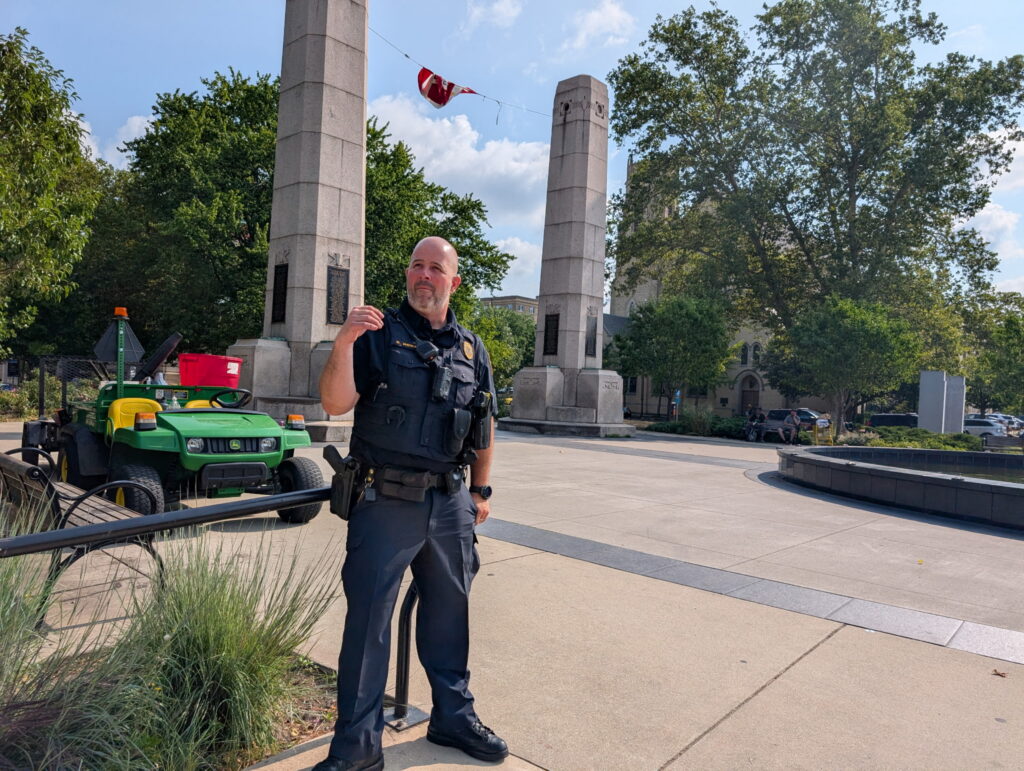
While no city rule can prevent individuals from congregating in city parks, GRPD is allowed to ensure individuals gathered there aren’t obstructing benches or violating ordinances on public intoxication. Those in violation are subject to identification checks, which can help officers find individuals with outstanding warrants.
While officers like Howard work proactively on homelessness, some in the community have called for a bolder response.
Michael Hyacinthe, co-owner of Has Heart coffee, told The Grand Rapids Herald the city should do more on homelessness in the wake of a stabbing that took place just outside his shop this month. Several Grand Rapids businesses in March told The Herald they were frustrated with the city after it seemingly failed to take meaningful action to confront the accumulation of human feces and needles around their downtown storefronts.
Social media continues to apply pressure on the city to correct homelessness, such as recent images circulating online of a queen mattress left on the street by one homeless group.
Social media is also a source of critique for the department enforcing code violations. While detractors often become amplified online, Howard encouraged city residents to learn about police by engaging in person.
“Critics are really vocal… it’s really easy to throw stones,” he said. “My passenger seat is always open. I would invite city commissioners and everybody else who likes to throw stones.”
Howard said he even enjoys engaging with critics. Former Grand Rapids Police Chief Eric Winstrom was vocal about the way activism and political pressure played into his decision to vacate his role in February, something that Howard said he embraces.
“I’ve had hostile people ride with me who are not pro-police and it’s great because it’s like ‘welcome to my world,’” he added. “I want you to see what I see.”
While his job has shown him that homelessness is a complex issue without a simple solution, Howard said he enjoys encouraging the city’s homeless residents to seek the help they need.
“[We’re] telling them that you can be part of a higher standard,” he said. “[We’re] empowering them. You can do more.”
Write to jackson@grherald.com