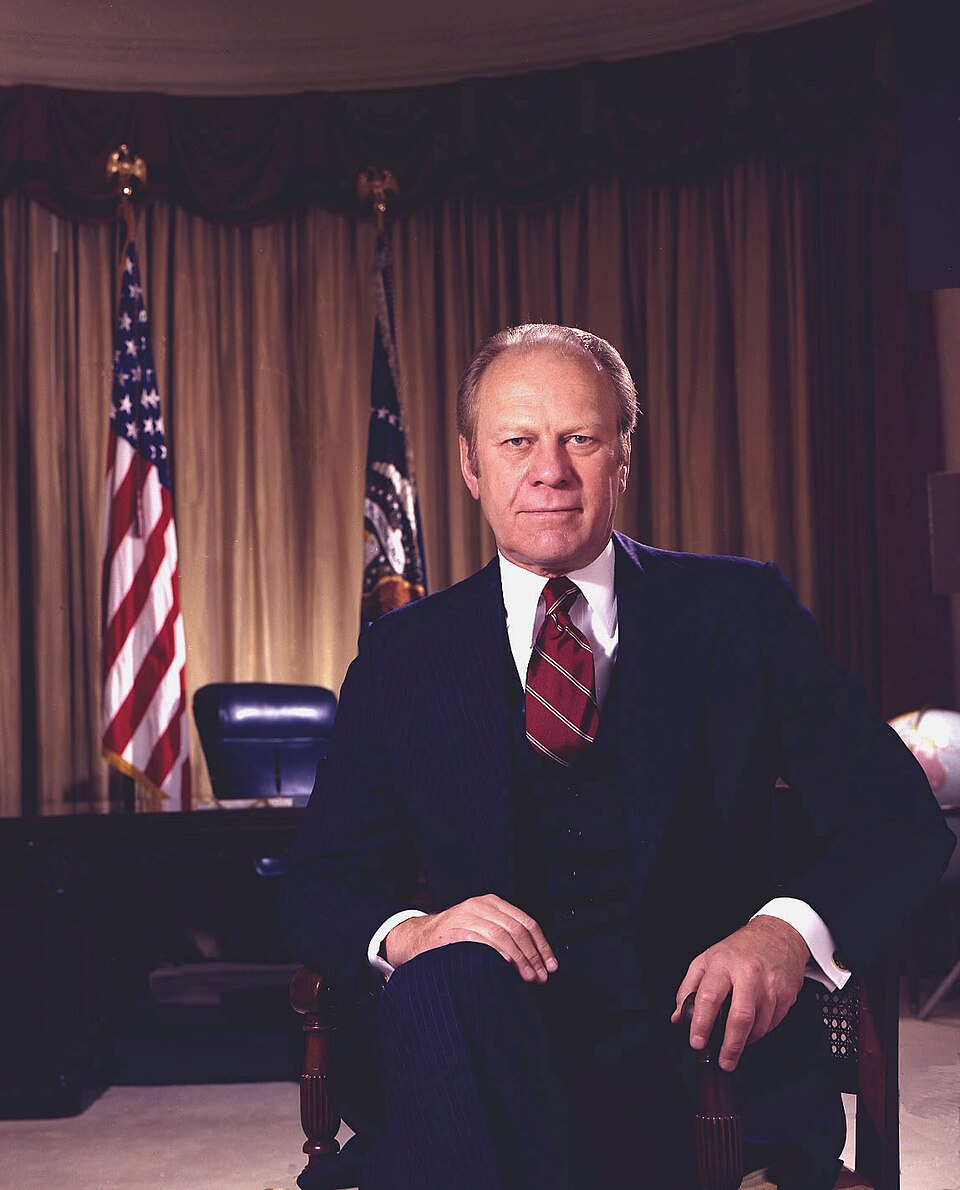
As the country gathers to celebrate America’s 250th anniversary, Grand Rapids will be among a select few U.S. cities which raised one of the nation’s presidents.
President Gerald Ford, the 38th president of the United States, was raised in Grand Rapids and established a law practice in the city before pursuing politics. His connection to Grand Rapids remained strong throughout his life, and both he and his wife Betty Ford were buried downtown near the banks of the Grand River.
During his time in the White House, Ford had the unique honor of presiding over the nation’s last major milestone, the bicentennial. Those celebrations included visits from both Queen Elizabeth II and then-President of France Valéry Giscard d’Estaing .
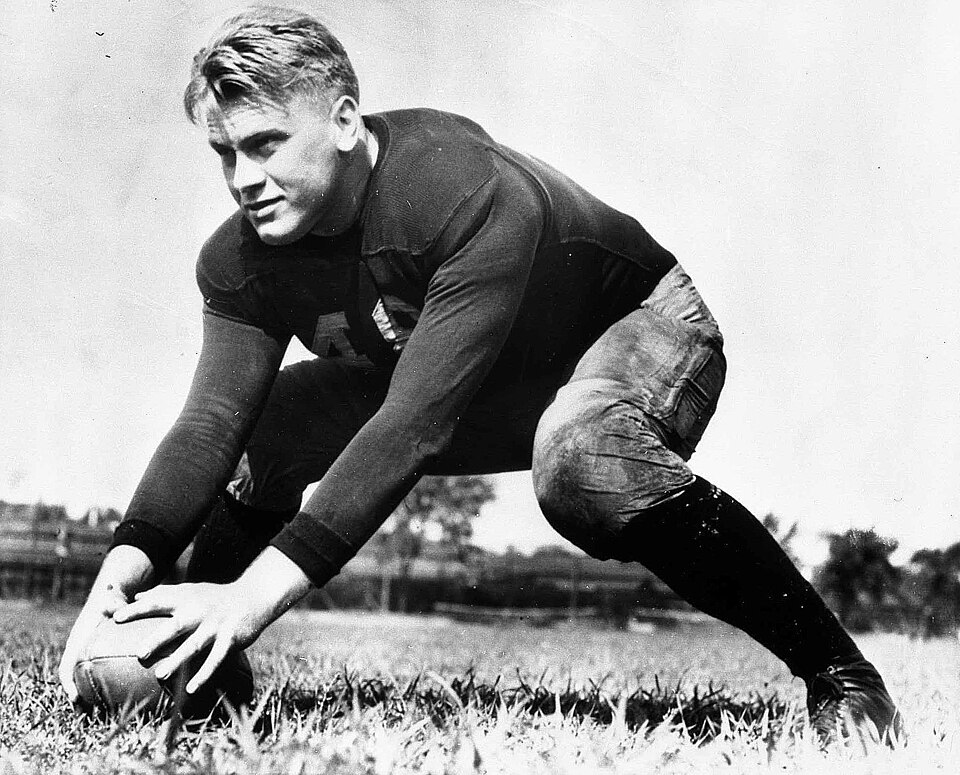
Ford grew up in East Grand Rapids and attended Grand Rapids South High School, where he was a star football player. He went on to represent the school in the All-City team of the Grand Rapids City League.
Athletes from competing schools “always spoke highly” of Ford, according to comments from childhood friend Harold Bosscher. Ford also credited much of his later political determination to his time playing sports.
Ford went on to play football at the University of Michigan where he became a two-time national champion. He turned down offers to play professionally for both the Packers and Lions, opting instead to pursue a law degree at Yale University.
His Michigan upbringing continued to influence much of Ford’s actions as president as he sometimes asked the Navy band to perform “The Victors” instead of “Hail to The Chief” at state events.
Upon his return to Grand Rapids after serving in the Navy, Ford became involved in local Republican politics. He then launched a campaign for House where he represented Michigan’s fifth congressional district, which included Grand Rapids until 1993, for the next 25 years.
Ford later rejected offers to run for the Senate and Michigan governor, deciding to try for House speaker. He instead became House minority leader, paving the way for him to eventually be appointed vice president to Richard Nixon after the resignation of Spiro Agnew.
Following Nixon’s resignation, Ford assumed the presidency, becoming the only commander-in-chief to have never been elected president or vice president.
Ford’s presidency was heavily plagued by the Watergate scandal, leading him to pardon Nixon in an attempt to avoid a lengthy and distracting trial. That decision was heavily derided by the press at the time, including The Grand Rapids Press.
“How can President Ford clear himself with the public after telling Congress, during his vice-presidential nomination hearing, that a President would have the power to pardon his predecessor, ‘but the people wouldn’t stand for it’?” The Press wrote at the time, according to an excerpt republished in Time Magazine.
After losing his reelection bid to President Jimmy Carter, Ford established his presidential museum in Grand Rapids. That building is separated from his presidential library in Ann Arbor– the only presidential museum and library to be split– though the two are still considered a single institution.
Following Ford’s death in 2006, the plane carrying his body performed a fly-over at Michigan Stadium in Ann Arbor. Members of the University of Michigan marching band also met Ford’s procession at the Grand Rapids airport, where they performed “The Victors” for him one last time.
Ford’s Domestic Policy Advisor Jim Cannon described Grand Rapids as “a place from which a man can journey far and never leave,” adding that “the values forged in Grand Rapids” never left Ford.
To recognize the Fourth of July, the Ford Museum will waive entry fees to all guests. Museum festivities will include live history reenactments, a patriotic art display and flag giveaways.