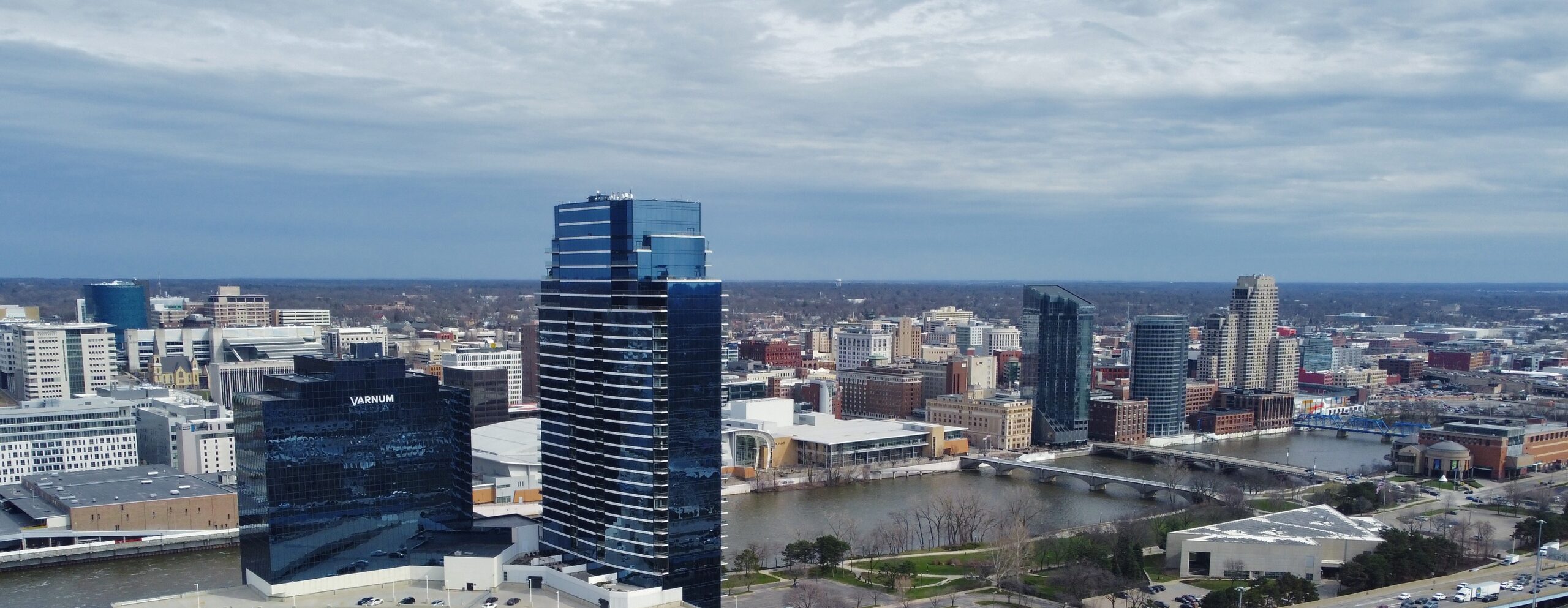
Grand Rapids’ high ranking for city management was buoyed by high marks in infrastructure, but brought down by education.
A 2026 WalletHub study found Grand Rapids to be one of the best-run cities in the country and the best in the state of Michigan. Among the 148 cities considered, Grand Rapids was ranked 27th nationally.
WalletHub collected data on health outcomes, safety, education, infrastructure, pollution, economy, and financial stability.
The furniture city performed best in the category of infrastructure and pollution, seventh overall. Metrics for this ranking include factors like air pollution, road quality, share of parkland, time spent commuting and share of residents with access to the internet.
Grand Rapids’ lowest ranking was in education, at 70th among the 148 cities. WalletHub measured both high school graduation rates and the share of public schools with an above average score on GreatSchools.org.
Roughly 23% of Grand Rapids Public Schools students met the Michigan Student Test of Educational Progress benchmarks for English-Language Arts in the 2024-25 school year. Just under 17% of GRPS students met M-STEP benchmarks for mathematics that same year, compared to 36% of Michigan students.
GRPS’s four-year graduation rate is almost equal to the state’s rate at 83%.
Grand Rapids was ranked 57th in terms of financial stability. WalletHub calculated financial stability using Moody’s City Credit Ranking and outstanding long-term debt per capita.
Moody’s has given the city a credit rating of Aa2, the third-highest of 21 rankings.
Grand Rapids performed 44th in overall health. Metrics like infant mortality, average life expectancy, hospital beds per capita, and the quality of the public hospital system determine this ranking. Between 2018-20, the rate of infant mortality in Grand Rapids was 6.2 deaths per 1,000 live births, compared to 5.42 infant deaths per 1,000 live births nationally.
The city ranked 60th in economy and 58th for safety. Ten economic metrics were considered, including factors like unemployment and underemployment, median household income, share of population in poverty, the rate of building permitting and changes in home prices.
The median sale price of a home is $300,320, a 3.4% increase year-over-year. According to the U.S. Census, about 17% of Grand Rapids residents live at or below the poverty line. Median household income was $69,000 as of 2024.
WalletHub used the rate of violent crime, motor vehicle fatalities per capita, the share of homeless individuals and perceptions of safety while walking alone in the day or nighttime to calculate its safety measure.
The city had the 37th smallest budget per capita, according to the study. Grand Rapids adopted a $786 million budget for the fiscal year of 2027.
Write to juliana@grherald.com