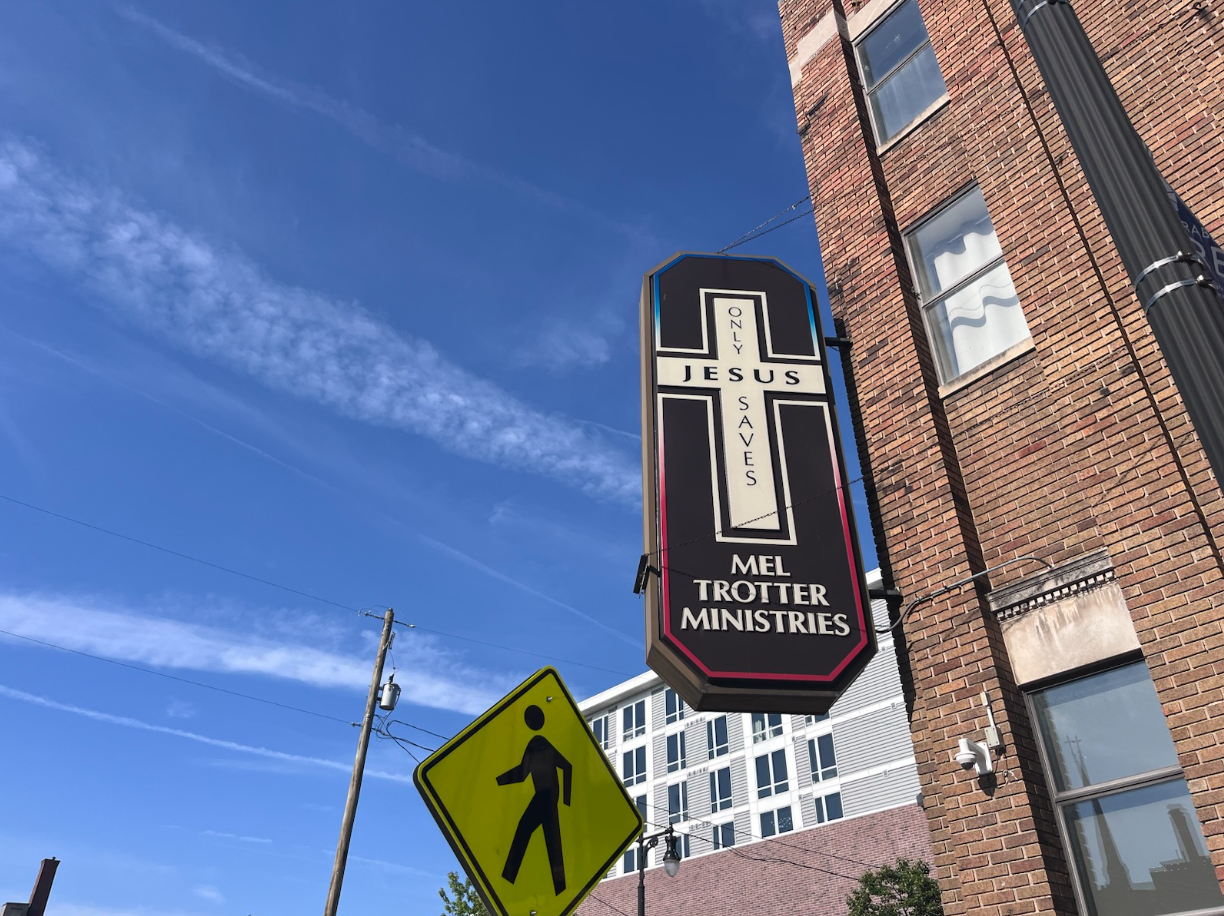
The Grand Rapids City Commission voted to fund the Mel Trotter Ministries homeless belongings storage program for $100,000 in its fiscal year 2027 budget.
Mel Trotter Ministries had used the funding to set up storage bins for homeless individuals to store belongings during the day. The program had previously been funded by federal dollars through the American Rescue Plan Act (ARPA), but those dollars are set to expire at the end of calendar year 2026.
Launched as a pilot in late 2021 and expanded with a $200,000 agreement in 2023, the program allows homeless individuals to store belongings during limited daytime hours in trash or recycling bin carts provided by the city.
Storage is available at Mel Trotter Ministries locations, for instance, on Williams St. SW and Division Ave. Unused bins sit idle for 21 days before contents may be cleared.
Mel Trotter Ministries Marketing Coordinator Allison Eischer told The Grand Rapids Herald that “for many individuals, the lack of a safe place to store personal belongings was keeping them from entering shelter, maintaining employment, or engaging with the services they need.”
“By providing secure storage, we eliminate that obstacle and allow our guests to focus on what matters most, and that is moving forward,” Eischer added. “This is just one strategy of making downtown welcoming for all.”
City leaders have advertised the program as a response to new ordinances cracking down on piled-up belongings, aggressive panhandling, and obstructions in downtown public spaces.
They have framed the initiative as an alternative before enforcement actions, helping manage complaints from downtown businesses and residents about safety, cleanliness, and obstructed pathways.
The Funding
The program was initially started with temporary funding from ARPA. At the end of this calendar year, ARPA funds will run out. The City Commission voted in light of the end of that funding to pay for the program itself when it passed the FY27 budget.
The budget projects a $100,000 appropriation from the city to the program, to be allocated from the city’s Refuse Fund.
Eischer said, “The funding is used primarily for leasing the space where personal belongings are stored, along with staffing costs.”
City officials maintain the program is part of a broader approach balancing compassion with public space management.
At an April 28 budget meeting, City Manager Mark Washington said the program will “help those who are unhoused have a respectable, decent place to store their belongings.”
The city’s appropriation of $100,000, according to the 2027 Fiscal Plan, will only cover half the program costs. “An additional $100,000,” the document says, “would be required to maintain current service levels consistent with prior years.”
The city is searching for additional funding sources for the program.
The Problem
Five years into the program, the underlying issues have only intensified.
Kent County’s Point-in-Time counts have documented a significant rise in homelessness since the pre-pandemic period, with a reported 56% increase between 2018 and 2025.
The response of the city government has largely been to add more service programs, though business owners downtown have still expressed frustration with the lack of effective law enforcement.
Recent efforts, including the “100 in 100” campaign and its successor Downtown Pathways Project, have sought to address the approximately 190 chronically homeless individuals in downtown Grand Rapids as of early 2026.
As of March this year, the 100 in 100 program has successfully housed 205 chronically homelessness individuals since its 2024 launch.
Mel Trotter Ministries has reported a 14% increase in the number of people served in recent years, signaling rising demand for services.
Write to jacob@grherald.com.