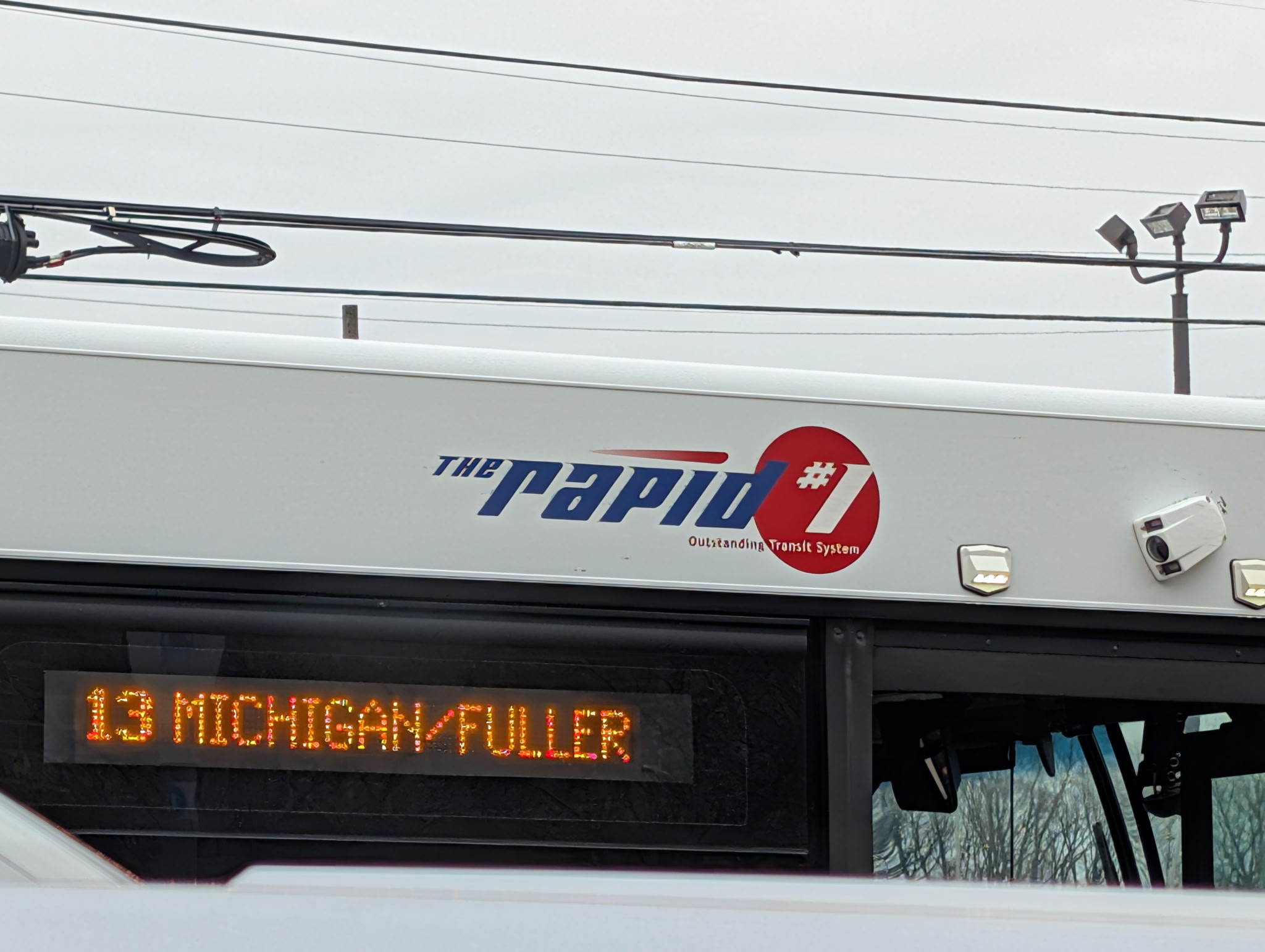
The Rapid bus agency is reconsidering a slate of advertising for overdose-reversal drugs.
At a July 22 board meeting, members voted 9-5 to grant an earlier appeal for an advertising campaign promoting Naloxone. The Grand Rapids Red Project, a nonprofit organization which seeks to reduce opioid-related deaths and infectious disease spread, is behind the campaign.
Naloxone is the generic name for Narcan, a medication which quickly reverses opioid overdoses. The drug has been available for over-the-counter use since 2023, and the Red Project distributes it in nasal sprays across the city.
The Red Project entered into a roughly $56,000 contract with the bus agency in March for a six-month advertising campaign. Rapid staff unanimously rejected the campaign, citing concerns about viewpoint neutrality and the association with drugs. The Rapid’s advertising policy prohibits advertisements for tobacco and tobacco-related products and drugs, as well as partisan advocacy.
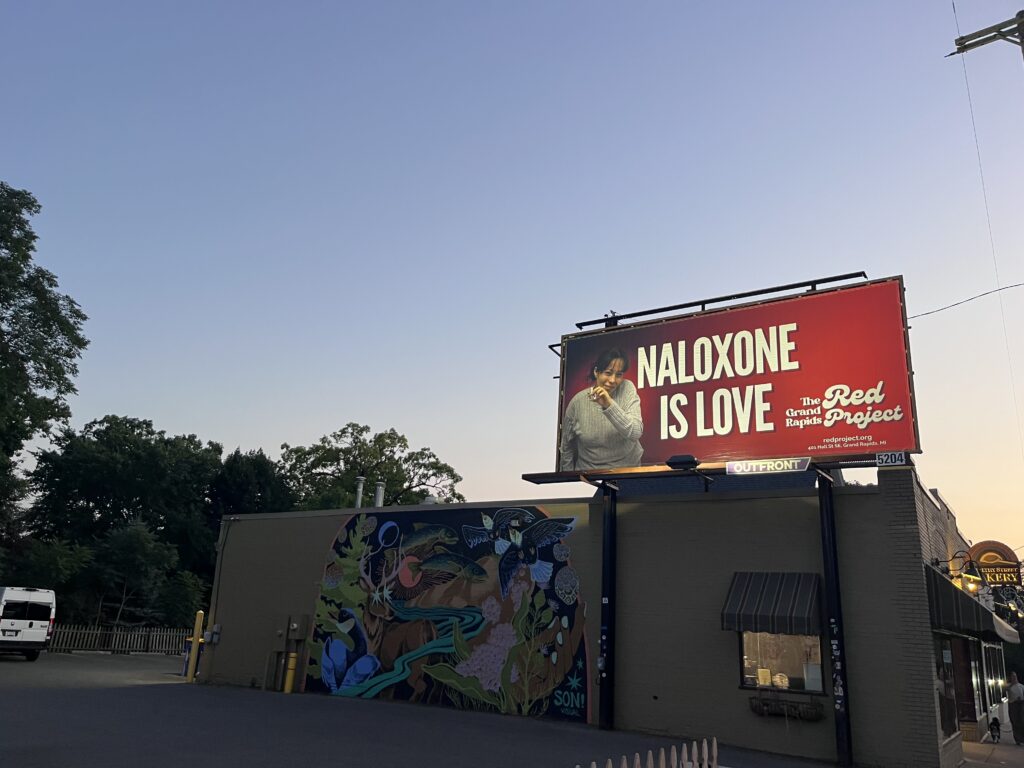
Bus advertising is part of Red Project’s larger campaign, funded by the Michigan Department of Health and Human Services. Billboards can be seen with the taglines, “Naloxone is empathy,” or other values of the Red Project.
The Red Project appealed that rejection, citing the drug as a life-saving measure. The Rapid Board of Directors voted to uphold the rejection at its May 27 meeting, 5-4.
“We were disappointed. Our goal was to share a public health message about a legal, lifesaving medication that has become an essential part of overdose prevention efforts,” said Catherine Kelly, Red Project program development director, via email. “We know there is a direct relationship between increasing naloxone access and reducing overdose deaths, and raising awareness of lifesaving tools like naloxone is an important part of that effort. Ultimately, our goal is always to help make our community safer.”
Board member Jack Hoffman of Grand Rapids raised the motion to reconsider the vote at the July 22 meeting, which was not originally on the board’s agenda. The Rapid’s attorney said the board had the discretion either to approve or deny the campaign, given the agency’s advertising policy.
“In my world, that was a very unpopular decision,” said Hoffman of the rejection. “And the very people we’re depending on for support, it was the most unpopular.”
Hoffman asked Rapid CEO Deborah Prato about her hesitancy following the vote. Prato raised concerns about both a slippery slope leading to advertising products like marijuana, as well as entrenching stigma about people who ride the bus.
“We already have a stigma that public transportation is for ‘those people.’ We’ve heard that over and over again. I wouldn’t use it,” Prato said. “Uptown has a public bus that goes through there, but they have a shuttle that’s going to take them to the amphitheater. Michigan Street Corridor needs their own. Creston needs their own. They have a bus that goes through there multiple times per day. So there’s some sort of issue.”
“People say, ‘I support public transportation. I’m just not going to ride it down to the amphitheater,’” Prato said.
She asked that the advertisements be external, not customer-facing. Bus riders have also complained about wraparound advertising affecting visibility outside of windows. Currently, about 90% of Rapid buses are covered with wraparound ads, she said.
The Red Project praised the decision.
We appreciate the board’s willingness to revisit our appeal and are encouraged by their decision. We believe helping people learn about naloxone is a common sense public health measure,” said Kelly via email. “We were grateful to see so many members of our community voice their support. That response reinforces what we’ve always believed: when it comes to saving lives, our community has far more in common than we sometimes realize.”
Board Chair and Walker Mayor Gary Carey asked fellow board members if the revenue from bus advertising was worth the money spent on staff and the potential to court controversy.
“Is the juice worth the squeeze on this?” he asked.
Board member Andy Guy, chief outcomes officer at Downtown Grand Rapids Inc., cautioned against discarding a revenue stream which has been growing.
Write to juliana@grherald.com