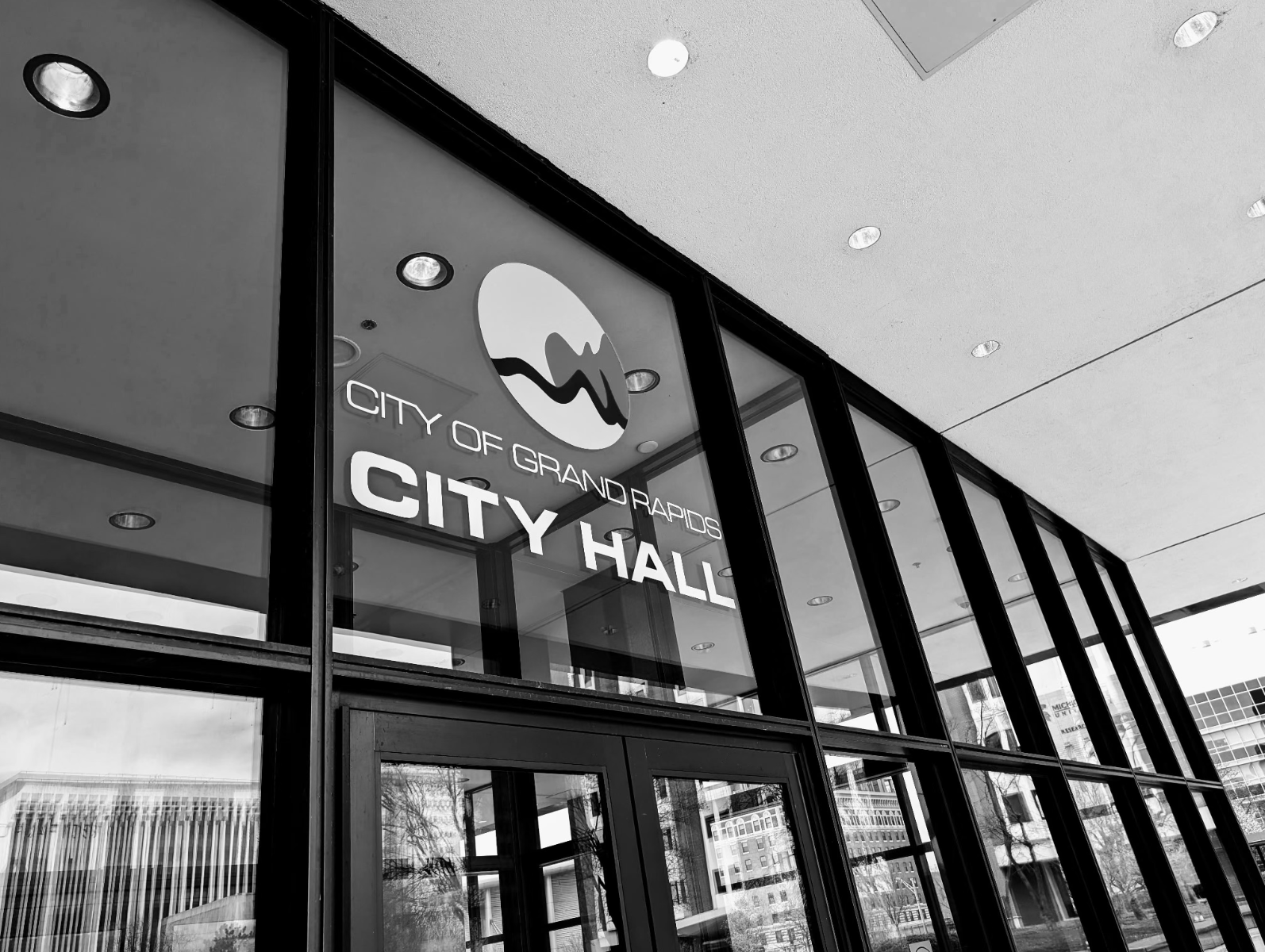
The Grand Rapids City Commission will hold a public hearing on recommendations to allocate approximately $8.2 million for city housing projects at its Tuesday meeting.
The funds will be directed under the city’s fiscal year 2027 Neighborhood Investment Plan, a plan which outlines the city’s grant appropriation approach to harm reduction and housing affordability.
The money would primarily be directed to city departments and nonprofits.
For preventing and resolving homelessness, $1.24 million would assist 163 households through tenant-based rental aid, eviction prevention, and transitional housing operated by groups such as Community Rebuilders, Degage Ministries, the Grand Rapids Urban League and the Salvation Army.
Another $2.51 million is slated for creating and preserving affordable housing, projected to produce 107 new rental units and 26 homes for sale.
A separate $2.82 million would go toward improving existing housing, targeting rehabilitation or repairs on 376 units, including code enforcement and minor home repairs.
Smaller slices address other priorities. Roughly $360,000 would fund home ownership counseling and legal aid expected to reach 3,000 people with fair-housing education and 120 with legal assistance. Job training programs would receive $149,000 to serve 137 individuals.
Behavioral health initiatives, neighborhood safety organizing, and community engagement projects would divide the remainder.
The recommended package includes $3.9 million from the federal Community Development Block Grant, $2.4 million from HOME Investment Partnerships, $302,000 from Emergency Solutions Grants, $730,000 from opioid settlement funds, $700,000 from the city’s Affordable Housing Fund, and $88,000 from the Justice Assistance Grant.
The $8.2 million allocation is set to become the first year of the City of Grand Rapids’ five-year Consolidated Housing and Community Development Plan, which establishes the overarching framework, priorities, and equity-oriented goals that guide the annual selection and funding of specific projects.
“Housing segregation by race and income is apparent,” the plan says. “Both the City of Grand Rapids and Kent County are committed to taking intentional steps to dismantle the systemic and institutional injustices.”
Kent County most recently documented 1,239 homeless people in 2023, with per-capita rates among the highest in Michigan. In Grand Rapids alone, estimates place chronic homelessness at roughly 172 to 195 individuals as of early 2026.
The Neighborhood Investment Plan has operated on a similar budget in prior years, directing millions in federal and local dollars on an annual basis to nonprofits and city departments for similar services.
Final Commission approval is scheduled for May 12.
Write to jacob@grherald.com.