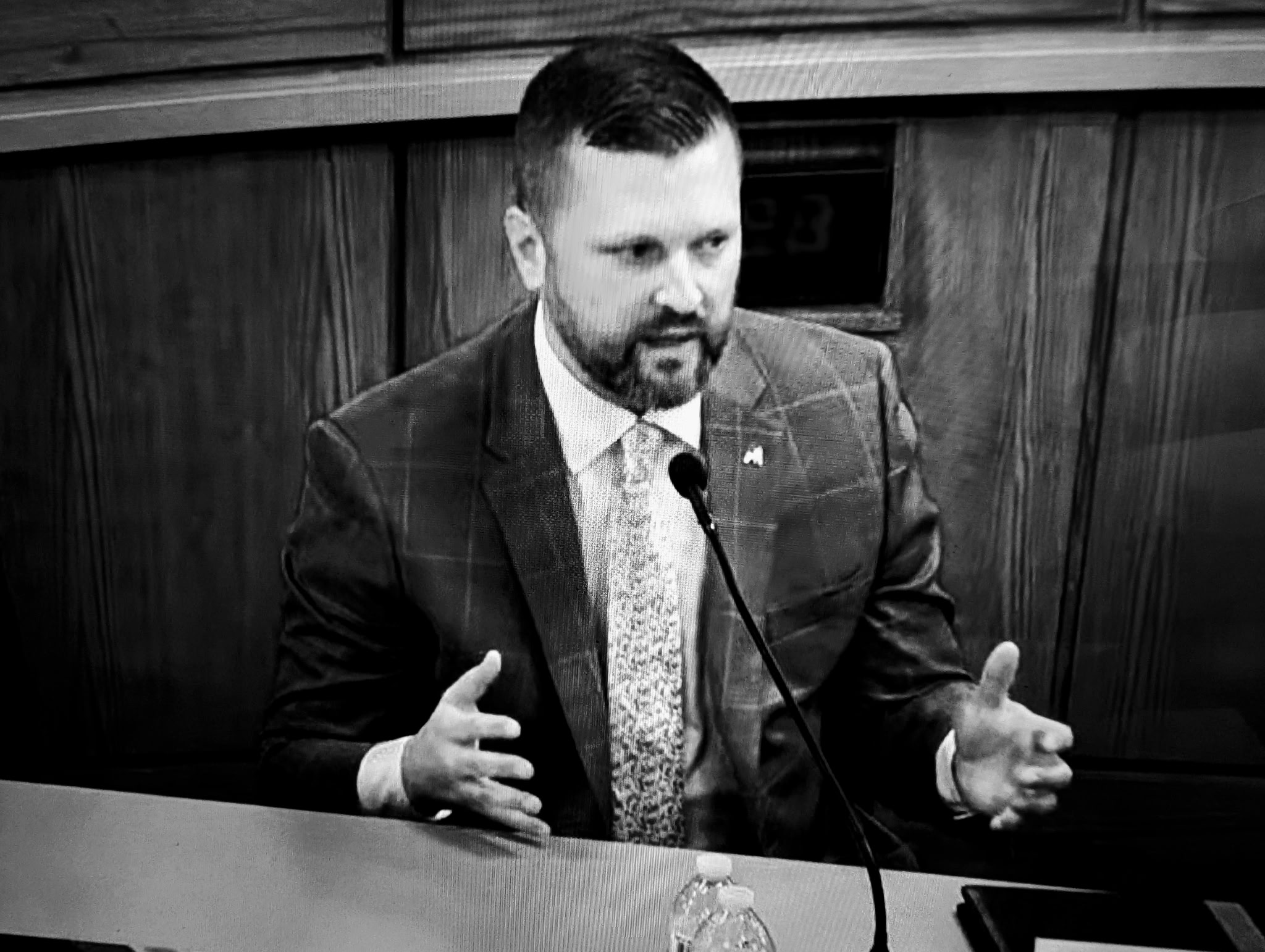
At a special meeting Wednesday morning, the Grand Rapids City Commission nominated Interim City Attorney Philip Strom to fill the position of City Attorney.
Mayor David LaGrand began the deliberations. “My choice at this point is our current deputy City Attorney, Phil Strom.”
Each commissioner in turn concurred with LaGrand’s remarks.
After three minutes of discussion, mostly regarding who made the initial motion to appoint Strom, the board voted unanimously to appoint him as full-time City Attorney.
Last year, the city hired a California-based executive search firm, Mosaic Public Partners, to conduct a national search for the role at a cost of $32,500.
Strom joined the City of Grand Rapids in 2019 as Deputy City Attorney, serving for six years before becoming interim city attorney in August 2025 following former City Attorney Anita Hitchcock’s retirement.
Prior to his time in Grand Rapids, the Escanaba native worked as an elected prosecuting attorney, then county administrator and chief financial officer for Delta County, giving him experience in municipal law, litigation, labor relations, policy, and emergency operations.
The Commission chose Strom from among three finalists, each of whom participated in a March 30 public forum at which the candidates presented the ways in which they might help the city pursue its aims.
At the panel, Strom was joined by fellow candidates Matthew Cross and Sarah Hartman.
Cross, a partner at Cummings, McClorey, Davis & Acho, P.L.C., Traverse City office, has experience in municipal law and the private sector.
“I grew up around local government,” he told the panel, noting that he both litigates cases in state and federal courts and acts as a general counsel for elected officials.
“I think I’m most suited to fill this position,” he continued, adding that he is “very excited about what this commission is doing,” in particular its “decisive, bold action” and operation in “gray space” with respect to contentious issues.
Sarah Hartman is currently the Director of Legal Affairs for the Civil Litigation Division in the City of Grand Rapids. She has practiced law in Michigan and advises the city in dealings with labor unions, civil rights, and other government issues.
The panelists answered questions regarding hot-button issues facing Grand Rapids, mostly having to do with the city’s extralegal equity-based initiatives.
All three panelists agreed that sound legal counsel can help the city pursue equity in policing and prosecuting low-level offenses.
Strom told the audience that “we have to use the lens of equity in all areas” from garbage pickup to yard waste removal to policing.
Equity can be best pursued, he argued, through “effective communication strategies” and “collaboration with department heads.”
“How can we recognize some of the differences that need to be recognized and have not historically been recognized?” he asked, adding that the city has to “do better than we have in the past.”
Hartman and Cross provided similar answers.
“We’ll advise a department and key stakeholders with what could have been done better, and what maybe the policies and practices are that need to change,” Hartman told the audience, noting that though some policies might be legal, “we probably have a better way.”
She also said that policies and ordinances should be preemptively reviewed in order to make them more equitable from the start.
“We’re playing catch up from behind,” she said. “We live in a world with a lot of gray.”
Cross concurred, though he emphasized the difficulties inherent in making equitable policies preemptively.
Regarding the prosecution of low-level offenses, all three candidates agreed that in many cases it is more appropriate to help people get mental health treatment or access to social or economic services.
Cross told a story of helping a man “get the treatment he needed,” but he also noted the “gaps in the resources available to us,” specifically regarding economic circumstances and mental health.
“Take people as you find them,” he said. “Be empathetic, listen to what’s going on in their lives.”
Strom emphasized the attorney’s role in helping people get access to city services.
“When people come into court because they’re driving with a suspended license, we take every opportunity to help them get their driver’s license back, dismiss the case, and allow them to go on a diversion program,” he said. “Life is hard right now, and the criminal justice system can be unforgiving.”
The City Attorney functions as the chief legal officer in advising the City Commission and executive leadership on legal and policy matters.
The job description also includes advising on zoning regulations, Freedom of Information Act requests, Open Meetings Act compliance, and constitutional and City Charter issues.
Write to jacob@grherald.com