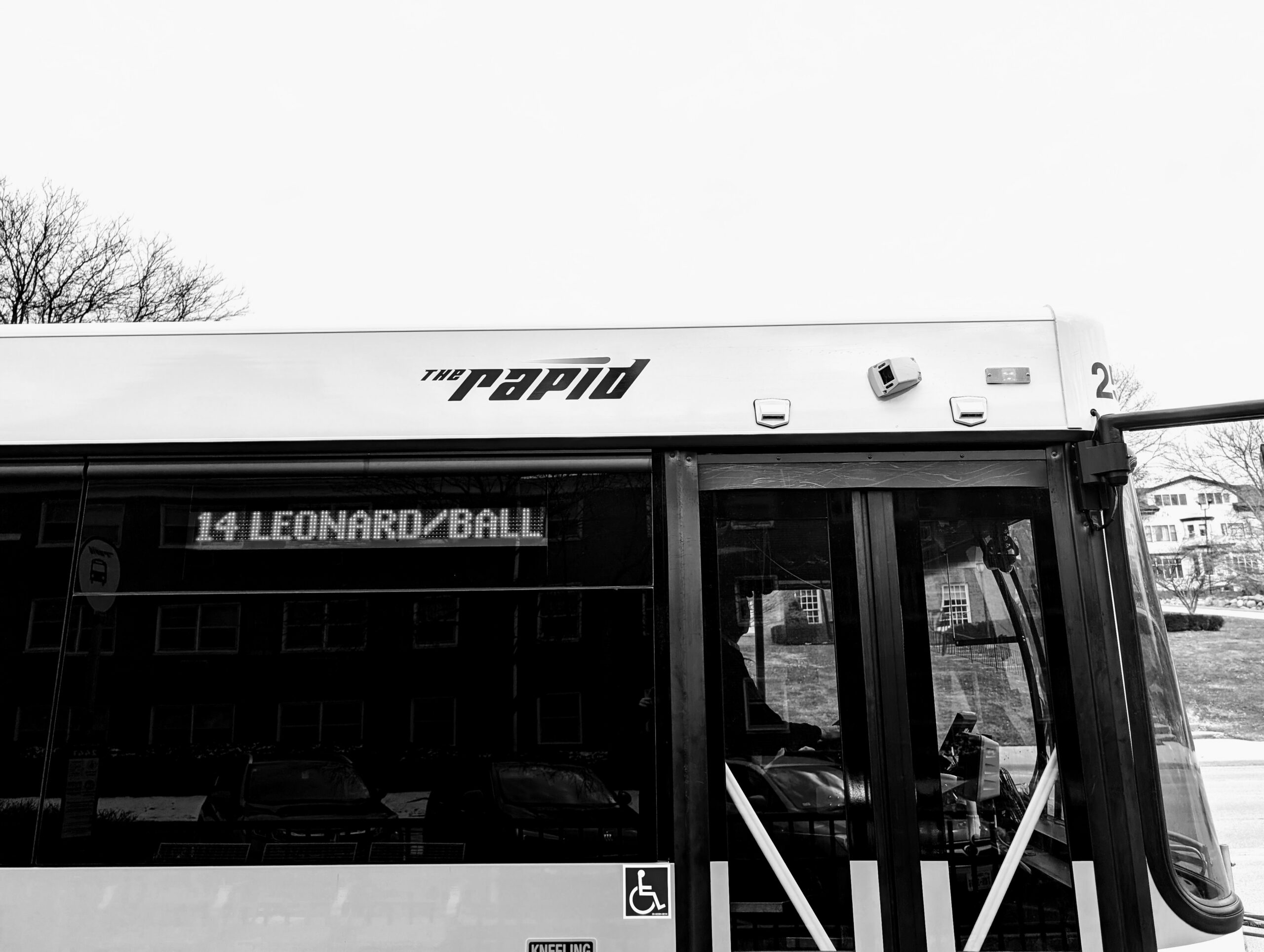
Despite a decline in service hours and ridership of Grand Rapids city buses, known collectively as The Rapid, operating costs continue to increase, according to city and federal data.
The Rapid touts its affordability and pitches itself to city residents as a way to “avoid the hassle of finding parking and the cost of paying for it.” Yet spending patterns indicate that The Rapid is becoming more unaffordable for Grand Rapids residents by the year.
In 2022, the Federal Transit Administration reported The Rapid’s operating expenses at $46.1 million. Expenses jumped to $50.9 million in 2023.
In 2024, operation costs rose for the third consecutive year to $51.2 million. Roughly $2.8 million of those dollars came from taxpayers via a city-wide property tax.
Wages Up
One factor contributing to the increased cost is management salaries.
The Rapid CEO Deborah Prato, for instance, earned $242,577 in 2024, according to multiple government salary watchdog websites.
That sum is approximately 426% higher than the average salary for The Rapid workers and 372% higher than the median salary. Prato’s wage reportedly increased $4,578 between 2023 and 2024.
Chief Operating Officer Steven Schipper also reportedly earned $178,642 in 2024, a jump of over $10,000 from the previous year.
Full-Time Vehicle Operator Martin Ogrodzinski made $120,071, which jumped $9,188 between 2023 and 2024.
Labor Unions are also driving up costs. In September of 2024, The Rapid announced an agreement with the Amalgamated Transit Union Local 836 bus operators’ union to increase bus driver wages by $3 an hour, followed by 4% raises in both 2025 and 2026. Under that deal, maintenance and facilities technicians saw a 6% wage increase, with 4% increases in both 2025 and 2026.
Each of the union’s active members received a $250 ratification bonus following approval of the deal.
Further, The Rapid also reportedly paid $800,000 over the appraised value for a second commercial building near its campus in Central Station.
Rider Woes
As costs have gone up, so have prices. Meanwhile, ridership has dropped.
Prior to April 2025, a single adult could ride the Rapid for $1.75, with a maximum daily cost of $3.25 and a maximum monthly cost of $47. While base fare currently remains unchanged, the Greater Grand Rapids public transportation voted to increase the daily fare cap to $5.25 in April 2025, meaning residents would no longer receive their third ride in a given day for free.
The board also voted to increase riders’ monthly fare maximum to $60, decreasing the amount of free rides offered per month.
In September 2025, users of Calvin University’s subsidized Wave Card also saw their Rapid fare jump from 50 cents to 75 cents. The school’s Director of Service-Learning Annie Mas-Smith estimated at the time that faculty, staff, students and other Wave Card users generated about 1,000 card taps per month for Rapid.
Covid Recovery
The City of Grand Rapids launched The Rapid in 1998 as a rebrand of the Grand Rapids Area Transit Authority, or GRATA. City data released in 2024 shows that ridership numbers accelerated in the years following the rebrand until reaching a plateau of about 12.5 million rides in 2014.
From that time on, ridership has steadily declined, falling to about 10.5 million riders in 2019, before plummeting to about 6.5 million riders in 2020 amid the Covid pandemic. The Rapid responded to the health emergency by announcing several safety precautions requiring face coverings, touchless payment, and frequent bus cleanings.
The lockdowns and subsequent precautions also forced The Rapid to drastically cut its operating hours. While much of its service was restored by late 2021, The Rapid buses reportedly operated at just 75% of their pre-pandemic service hours as of September 2024.
Ridership of The Rapid also continued to trail at just 68% of pre-pandemic levels. These figures pale in comparison to those of other Michigan cities such as Ann Arbor, which has since restored 125% of its pre-pandemic service hours and recovered 99% of its riders.
Nationally, other mid-sized cities have also beaten Grand Rapids in restoring their bus services. Seattle’s Sound Transit has restored 115% of service hours and 109% of riders since the pandemic. The Milwaukee County Transit System saw a 101% rebound in service hours and a 103% leap in riders.